
Researchers at Tohoku University have combined Japanese population genome data with enzyme analysis to investigate genetic differences affecting the metabolism of the cancer drug 5-fluorouracil (5-FU).
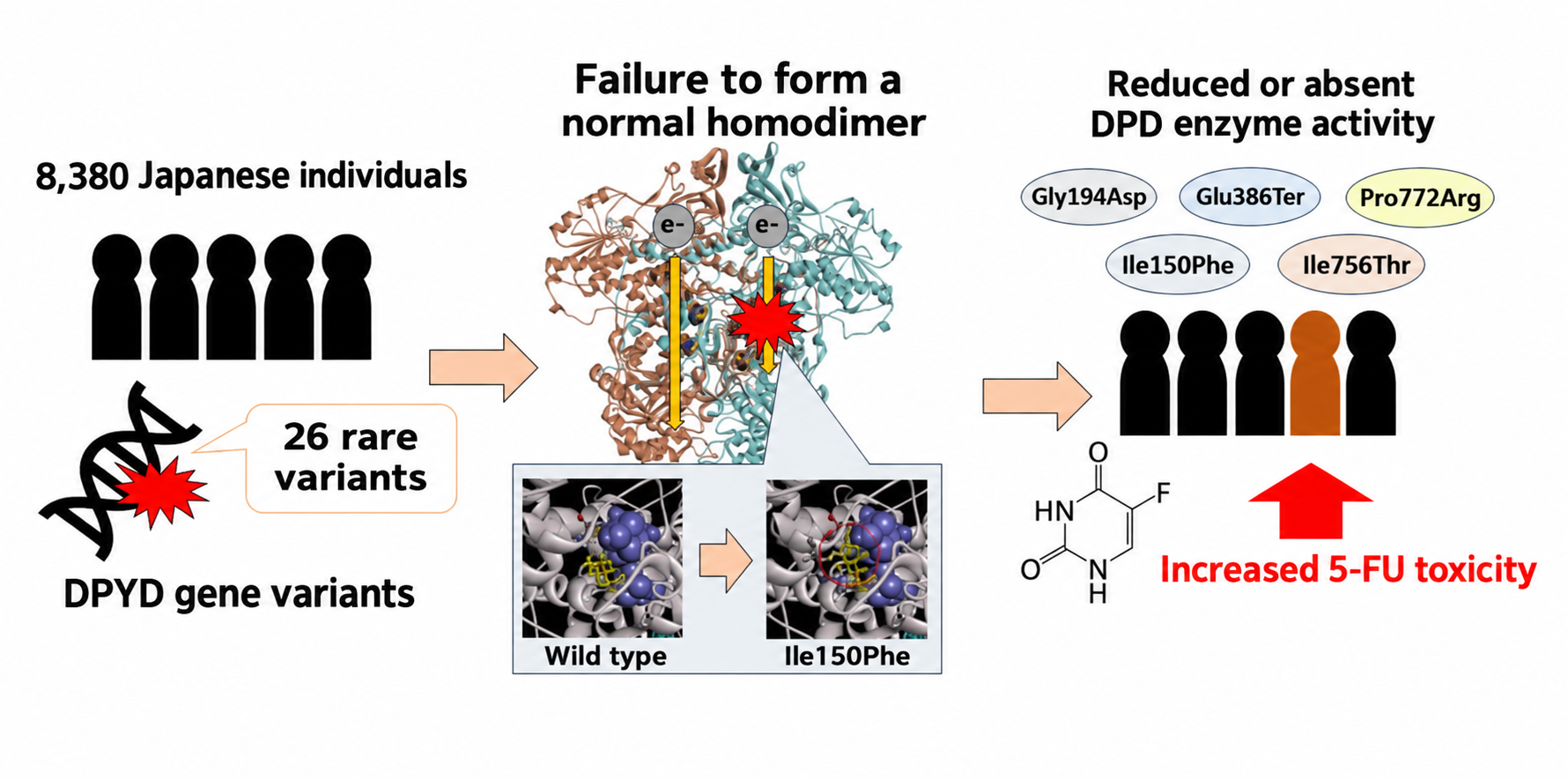
Using whole-genome data from 8,380 Japanese individuals collected through the Tohoku Medical Megabank project, the team identified 26 protein-coding variants of DPYD. This gene encodes dihydropyrimidine dehydrogenase (DPD), a key enzyme responsible for breaking down 5-FU.
Tests with recombinant proteins revealed markedly reduced or absent enzyme activity in five variants; three showed no detectable activity. Reduced DPD activity can allow 5-FU to accumulate, increasing the risk of severe adverse effects.
Commonly tested European risk variants are rare in Japanese populations. The findings therefore provide a basis for developing more appropriate genetic tests and individualised dosing strategies in Japan. Clinical studies are still needed to establish how these variants affect drug exposure and adverse reactions in patients.
Sources: Tohoku Medical Megabank, 5 October 2026; Drug Metabolism and Disposition, published online 17 September 2026.