
https://sj.jst.go.jp/news/202603/n0316-02k.html
https://journals.physiology.org/doi/full/10.1152/ajpendo.00518.2025
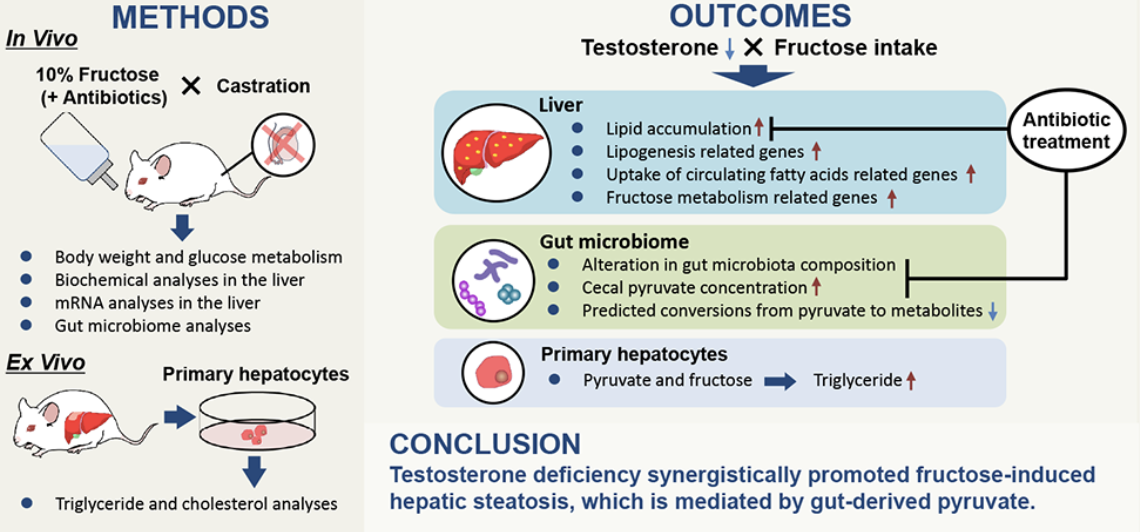
Hepatic steatosis (fatty liver) is the initial stage of metabolic dysfunction-associated steatotic liver disease (MASLD) and is highly prevalent among middle-aged men. Low testosterone levels and dietary fructose intake are independent risk factors for MASLD, although these can occur simultaneously.
Pyruvate promotes triglyceride accumulation in primary hepatocytes in the presence of fructose, and testosterone deficiency synergistically exacerbates fructose-induced fatty liver. Fatty liver is associated with several risk factors, including obesity and type 2 diabetes, as well as with reduced levels of male hormones (testosterone) and consumption of fructose found in soft drinks and other beverages.