
Reduced testosterone levels and fructose ingestion lead to fatty livers in mice

https://sj.jst.go.jp/news/202603/n0316-02k.html

https://journals.physiology.org/doi/full/10.1152/ajpendo.00518.2025

Hepatic steatosis (fatty liver) is the initial stage of metabolic dysfunction-associated steatotic liver disease (MASLD) and is highly prevalent among middle-aged men. Low testosterone levels and dietary fructose intake are independent risk factors for MASLD, although these can occur simultaneously.

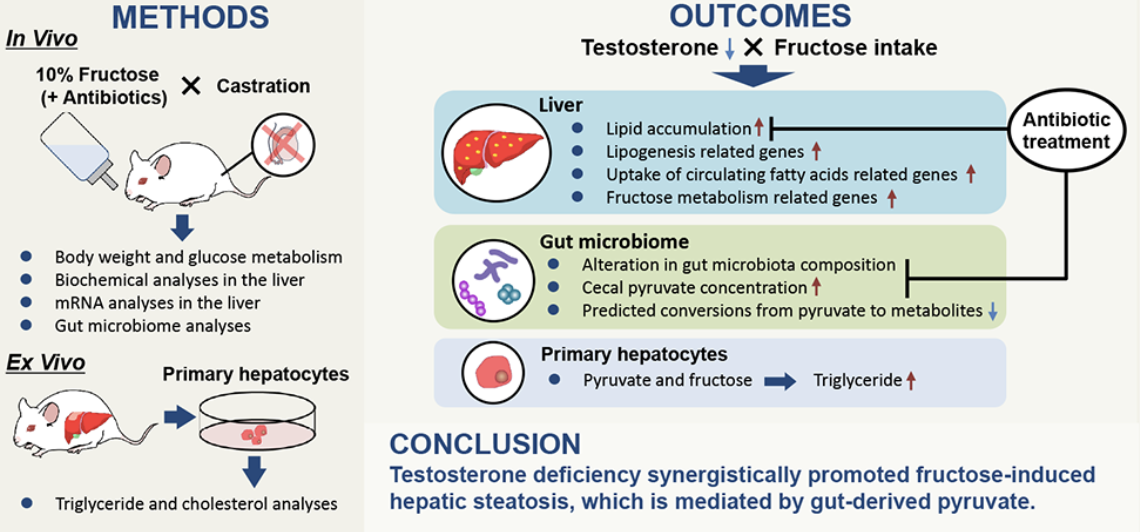
A research team from Osaka Metropolitan University, Nagaoka Co., Tokyo Medical University and the Lundquist Institute for Biomedical Innovation in the United States have now demonstrated that testosterone deficiency and fructose intake synergistically promoted fat accumulation in the liver of castrated mice. This accumulation was caused by an increase in pyruvate mediated by gut microbiota activity.

Pyruvate promotes triglyceride accumulation in primary hepatocytes in the presence of fructose, and testosterone deficiency synergistically exacerbates fructose-induced fatty liver. Fatty liver is associated with several risk factors, including obesity and type 2 diabetes, as well as with reduced levels of male hormones (testosterone) and consumption of fructose found in soft drinks and other beverages.
Most popular posts:

This website stores cookies on your computer. These cookies are used to provide a more personalized experience and to track your whereabouts around our website in compliance with the European General Data Protection Regulation. If you decide to to opt-out of any future tracking, a cookie will be setup in your browser to remember this choice for one year.

Accept or Deny