https://www.nedo.go.jp/news/press/AA5_101918.html
https://www.harima.co.jp/en/newsroom/2026/0312100000.html
Lycopene is a carotenoid found in tomatoes and other fruits. It is used as an antioxidant in food and cosmetics.
As part of NEDO’s “Development of Bio-based Product Production Technologies to Accelerate Carbon Recycling”, Harima Chemicals Co., Ltd. and the Research Institute of Innovative Technology for the Earth (RITE) have successfully developed mass production technology for lycopene. This project has already completed demonstration of commercial-scale cultivation, and plans to establish an integrated lycopene production system using smart cells and begin commercial deployment within fiscal year 2026.
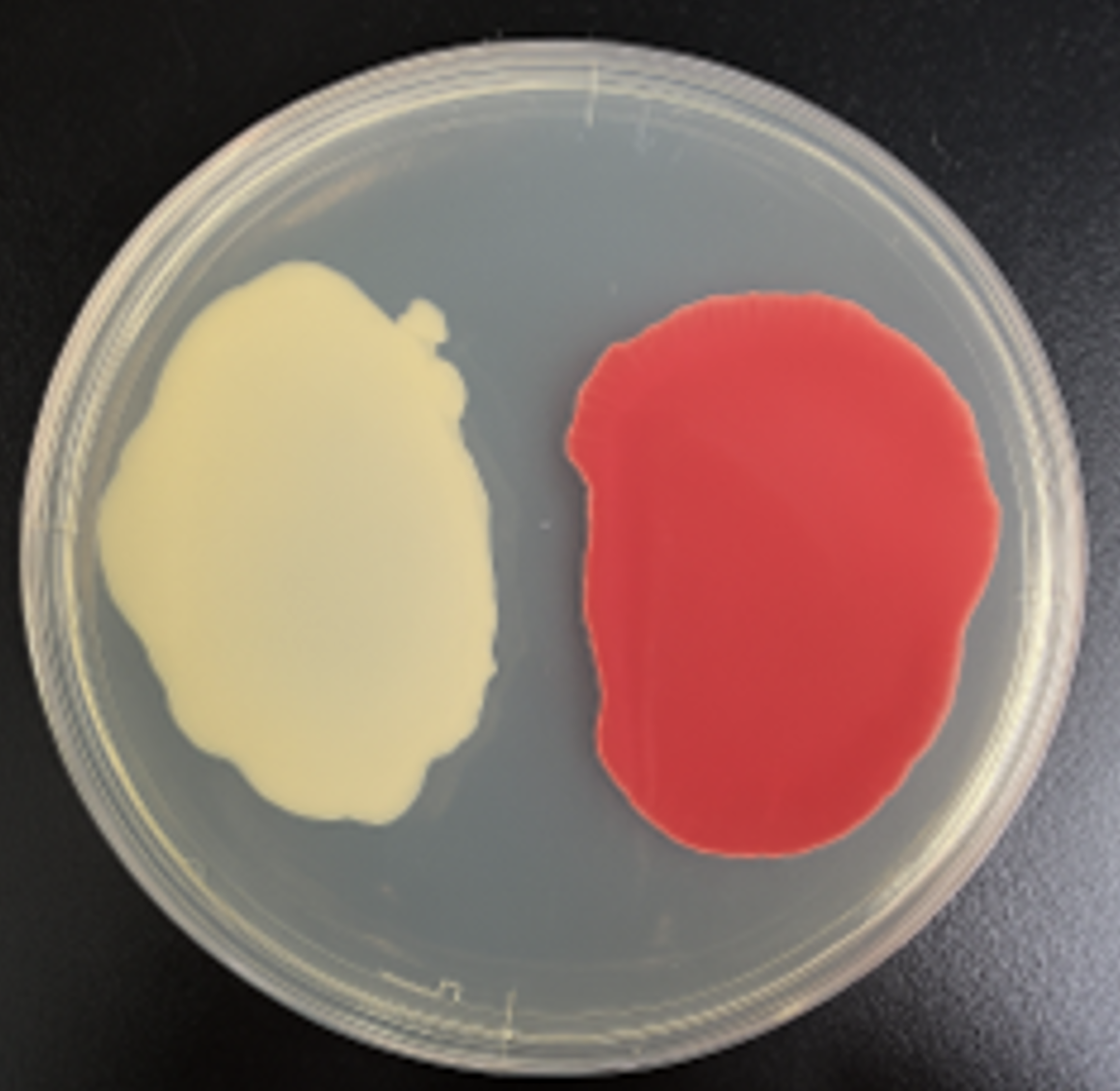
In this development, Corynebacterium species was used as a host. By using genetic engineering approaches such as blocking pathways involved in by-product production, RITE achieved a productivity increase of more than 100-fold compared to the unmodified strain. This resulted in the development of a bacterial strain capable of producing lycopene at the gram weight level per unit culture solution, achieving a production volume sufficient for commercialization verification.
Harima Chemicals contribution is a process for industrially recovering and purifying lycopene from fungal cells. Compared to conventional plant extraction methods and petroleum-derived synthesis methods, this manufacturing process not only contributes to reducing CO2 emissions, but also has the advantage of avoiding competition with food. By establishing a high-precision purification process for fermented fungal cells using smart cells, Harima Chemicals has developed a high-purity lycopene powder suitable for a wide range of applications. This powder is easy to handle and contains few impurities, making it suitable for a wide range of uses.
For cultivation, Harima Chemicals successfully demonstrated scale-up in a 3,000L fermenter, utilizing the demonstration facilities of the Kanto region biofoundry site of Green Earth Institute, Inc. (GEI), a participant in the NEDO project.
Carotenoids generally have the drawback of low bioavailability. Harima Chemical has addressed this issue by adding a functional modification process to its lineup, resulting in highly functional lycopene with significantly improved bioavailability, and plans to develop this product. This high-purity lycopene and high-functional lycopene have passed various safety tests required by the cosmetics market, and we plan to develop products that meet a wider range of needs, including food and pharmaceutical grade applications.
The photo shows the change in bacterial cell color due to smart cell development. Left: before improvement, right: after improvement.