https://bio.nikkeibp.co.jp/atcl/news/p1/26/01/19/14166/
https://sanatech-seed.com/ja/20260116-2/
Melons ripen very quickly after harvest, resulting in a short shelf life that not only contributes to food waste but also poses major challenges when transporting them long distances and exporting them overseas.
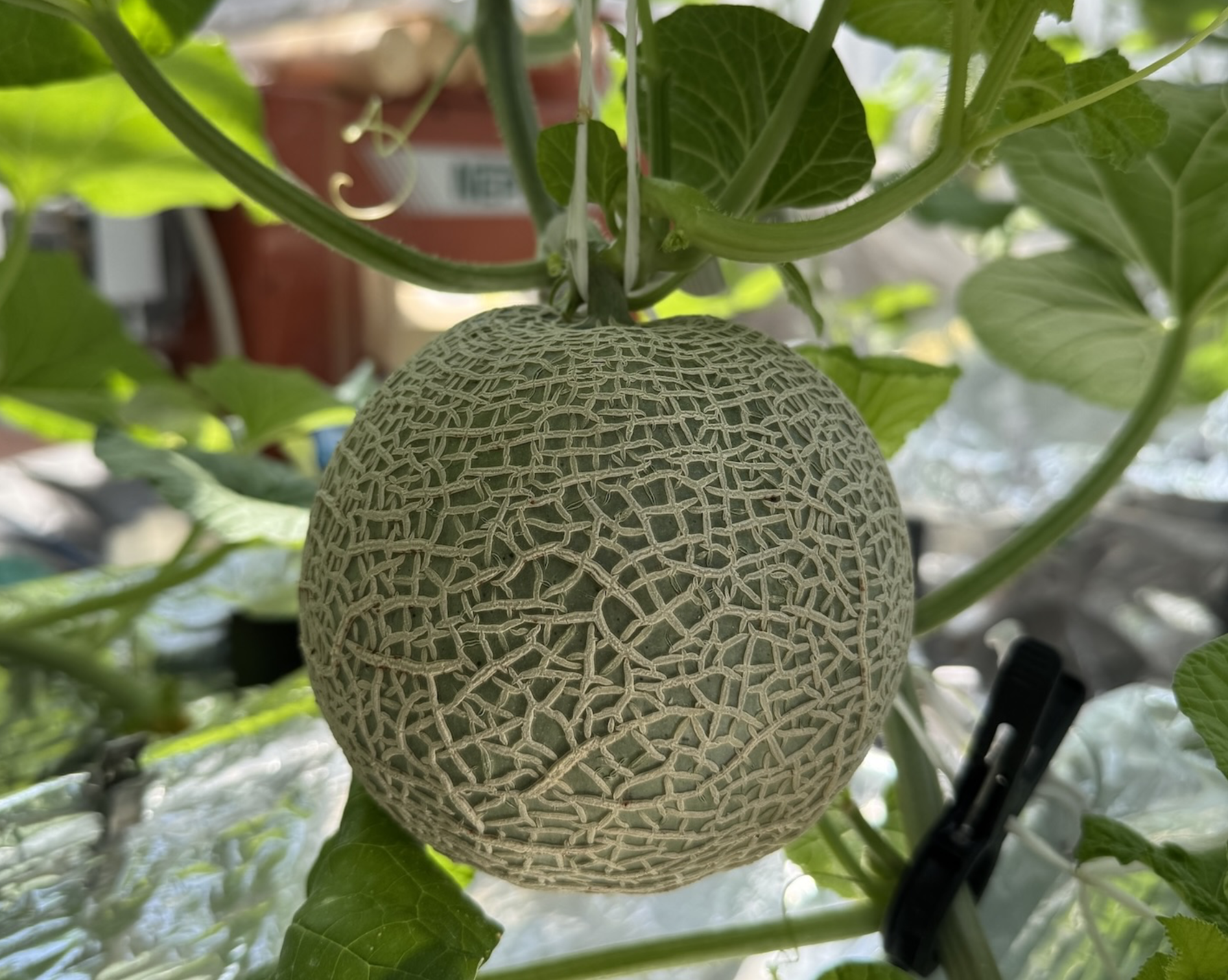
In light of this situation, Sanatec Life Sciences, Inc., in collaboration with the National Agriculture and Food Research Organization and the University of Tsukuba, has applied genome editing technology called “in planta Particle Bombardment (iPB)” (Note 1) to melons. By inactivating genes involved in fruit ripening, they have succeeded in creating a muskmelon with excellent shelf life and the ability to adjust the time it takes to eat it.
This achievement will enable distribution to distant regions and low-cost overseas export via sea transport. Going forward, with the aim of expanding domestic consumption and stimulating overseas expansion, Sanatec Life Sciences plans to proceed with notification and variety registration with relevant government ministries and agencies, with commercialization expected within three years.
Sanatech Life Sciences, Inc. is committed to product development under its corporate philosophy of “For tomorrow’s children and tomorrow’s planet.” As a global company, we will continue to work diligently toward commercializing genome-edited crops in line with our corporate philosophy.
For more information, please visit the official NARO website below.
http://www.naro.go.jp/publicity_report/press/index.html
https://www.naro.go.jp/publicity_report/press/laboratory/nias/173790.html
Note 1: In planta particle bombardment (iPB) method
Jointly developed by NARO and Kaneka Corporation, this technology directly introduces DNA, RNA, or proteins into the growing point of a plant. When applied to difficult-to-cultivate plant species and varieties, it enables genetic modification and genome editing in a wide range of plants. For more information on the iPB method, please visit the following website:
https://www.naro.go.jp/project/results/5th_laboratory/nias/2021/nias21_s11.html
The research team used genome editing to knock out CmACO1, which encodes ACC oxidase (ACO), an enzyme that synthesizes ethylene, which ripens melon fruit, and developed a melon that does not synthesize ethylene. Melons contain five ACO genes, CmACO1 through CmACO5, but the CmACO1 gene is particularly important for fruit ripening. The genome editing was performed on the standard high-quality muskmelon variety “Earl’s Favorite Spring Line No. 3.” The genome editing was performed using in planta particle bombardment (iPB), a transformation technique in which a particle gun is used to directly inject the CRISPR/Cas9 system’s DNA-cleaving enzyme and guide RNA genes into the plant’s growing point. The knockout melon, which had a two-base deletion in the CmACO1 gene, failed to ripen even one month after harvest and remained hard. Adding ethylene to the melon softened and ripened within three days. The research team claims that this allows for the distribution of on-demand melons, which ripen when needed. This has the advantage of reducing waste and strengthening exports.